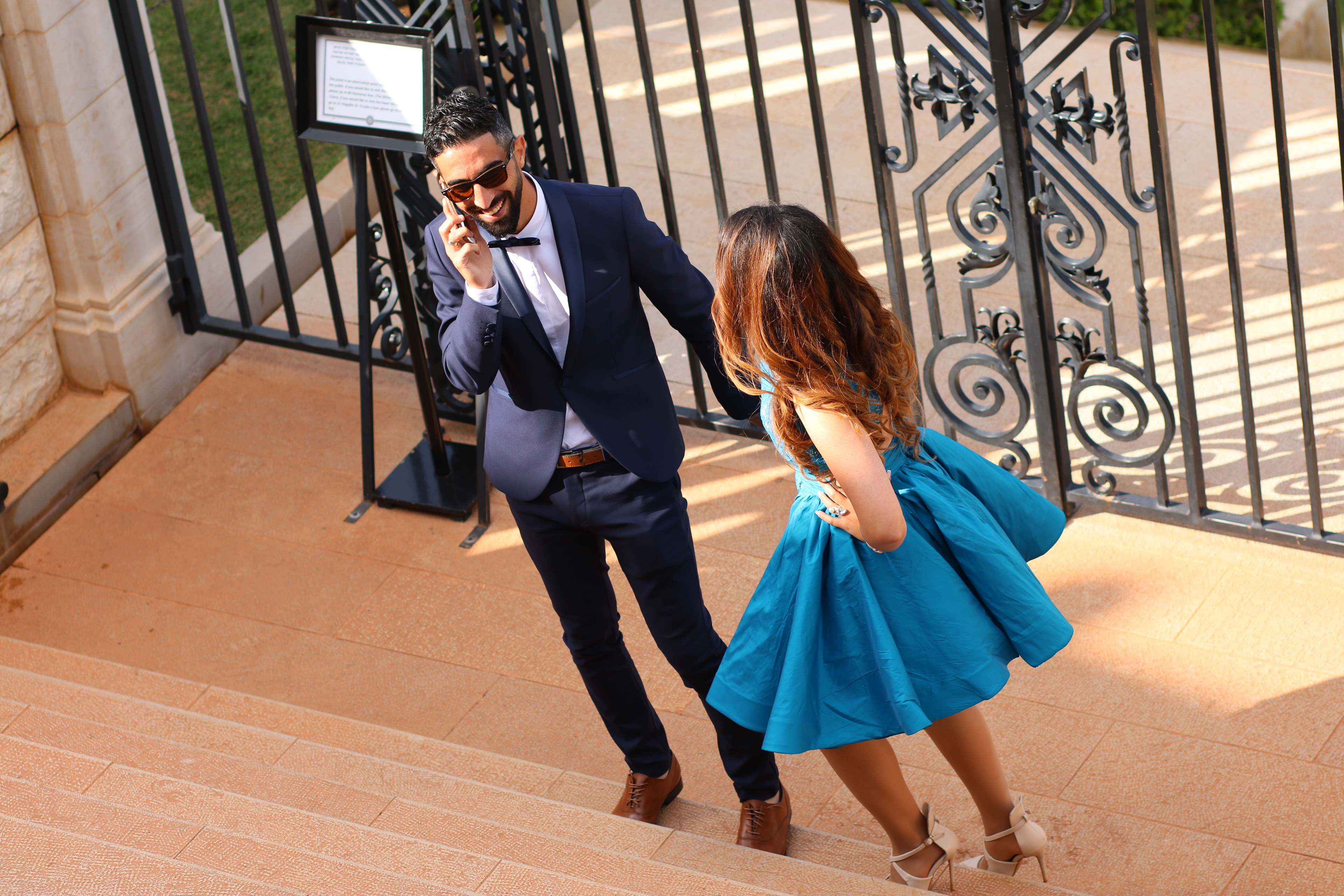
The image looks joyful at first glance, almost deceptively so, the kind of frame that used to define wedding photography for decades. A sharply dressed man in a dark blue suit is halfway up a sunlit staircase, laughing into his phone, sunglasses catching the light, while a woman in a turquoise dress spins slightly toward him, her skirt lifted by motion, her heels balanced on the warm stone steps. The iron gate behind them is ornate and formal, hinting at a venue chosen carefully, a place meant to feel timeless. The light is clean, midday confident, no drama in the shadows, just clarity, movement, and a feeling of “this is happening.” And yet, when you look at it as a photographer in 2026, the question almost asks itself: how many couples are still commissioning this moment, in this way, at this scale, with this expectation?
Wedding photography hasn’t collapsed, but it has definitely thinned out, like a river that still flows but no longer floods its banks. The big shift isn’t only economic, though inflation and cost-of-living pressure play their part. It’s cultural. Weddings are smaller, shorter, less theatrical, more private, and increasingly fragmented into multiple micro-events rather than one grand day that demands full coverage. Couples still want photos, but fewer want twelve hours of documentation, two photographers, a cinematic edit, and a heavy album that lives on a shelf. They want highlights, moments, proof of feeling rather than proof of scale. Images like this one, full of motion and confidence, still happen, but they happen in narrower windows, often surrounded by phones, friends, and guests who are already making their own parallel visual record.
Another quiet pressure comes from the democratization of “good enough.” Phones shoot beautifully, guests know how to frame, and couples are less afraid of imperfection. The mystique of the professional photographer as the sole guardian of memory has faded. What remains valuable is not coverage, but interpretation. A frame like this works because it’s observed from above, because the timing is precise, because the photographer chose distance over intrusion and let the scene breathe. That kind of seeing still matters, but fewer couples can articulate why they should pay for it until they see it afterward, and by then the booking decision is already past.
The market isn’t shrinking evenly; it’s polarizing. At the top end, weddings become almost editorial productions, and photographers become brand extensions. At the lower end, photography becomes a line item to minimize. The middle, where most working photographers once lived, is the part that’s eroding. And that’s why this image feels slightly nostalgic even though it’s contemporary. It represents a moment when joy, ceremony, and professional observation still aligned naturally. Wedding photography isn’t disappearing, but it’s changing its shape, and if you listen closely, you can hear it asking photographers to stop selling coverage and start selling vision, before the gate quietly closes behind them.
Related