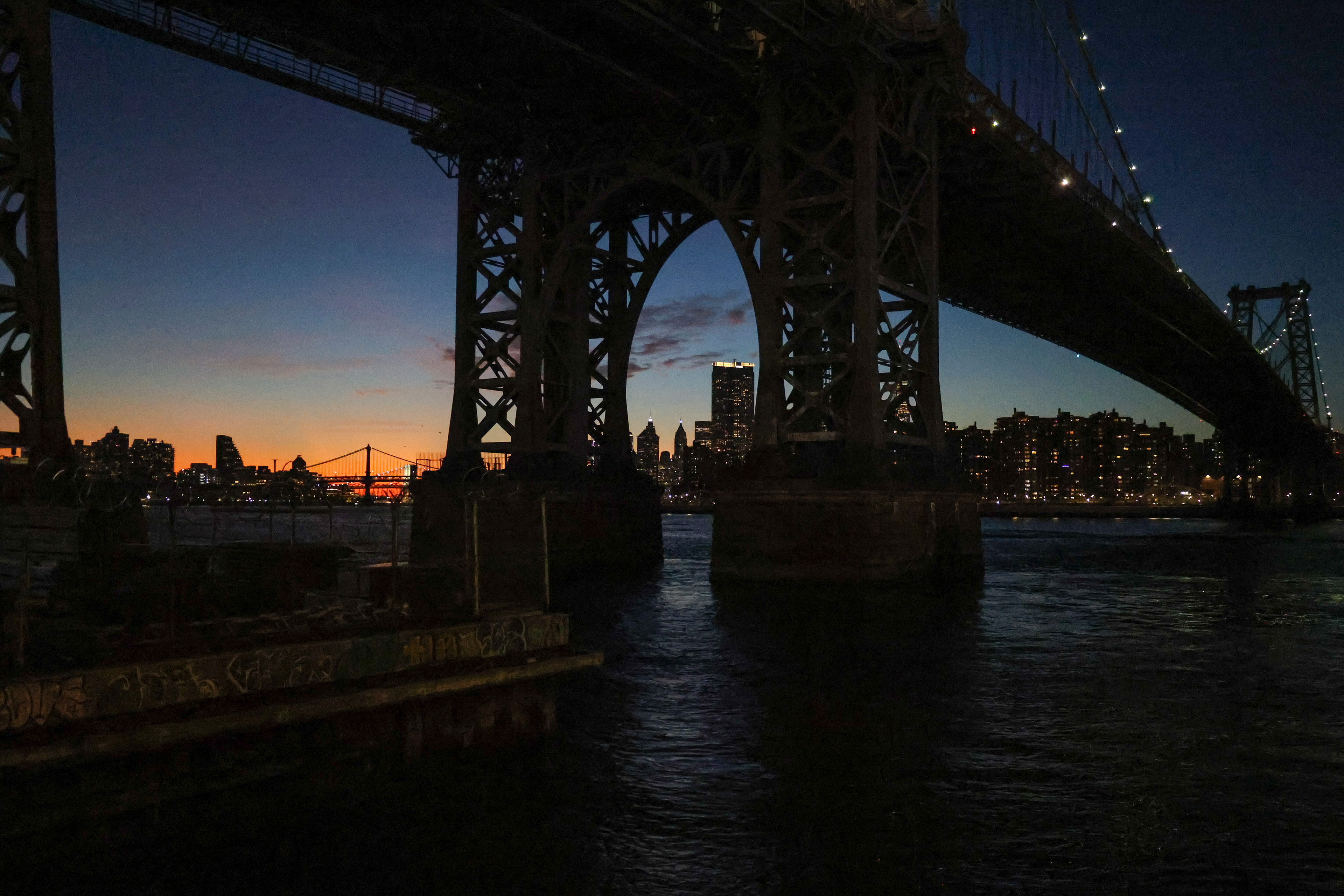
The frame opens under the massive ribcage of a steel bridge, its dark geometry stretching overhead like a ceiling made of iron bones, heavy and protective at the same time. The river below moves slowly, almost cautiously, catching only fragments of light, small trembling reflections that feel more like whispers than mirrors. Beyond the arches, the skyline burns softly in that fleeting orange-to-blue gradient that lasts maybe five minutes on a good evening, the kind of light you either catch or you miss, no second chances, no replay. A smaller bridge glows in the distance like a necklace thrown across the horizon, while scattered windows in the buildings flicker on one by one, as if the city is slowly waking up for its night shift. Everything in the foreground is allowed to fall into shadow, and that decision is the entire point of the photograph.
This image is a quiet lesson in trusting darkness instead of fighting it, in letting the scene breathe without forcing detail into places where it doesn’t belong. The shadows under the bridge are thick, almost swallowing the structure, yet they give the illuminated skyline its weight, its sense of reward. If everything were visible, nothing would feel earned. Low-light photography often tempts us to lift shadows, smooth noise, chase clarity until the mood evaporates, but here the darkness is doing real work, shaping the emotional hierarchy of the frame. The water is slightly blurred, the sky holds a gentle grain, the tiny lights strung along the bridge cables look like nervous punctuation marks, and all of it feels intentional even if some of it was pure accident. And that’s the honest secret of night shooting: the best images come from letting go a little, from shooting handheld, breathing slower, standing still longer than feels comfortable, and allowing imperfection to become part of the visual language rather than something to fix later.
Photographing scenes like this is less about equipment and more about restraint, about resisting the urge to correct what the eye already understands. Darkness is not a problem to solve; it’s a material to compose with, just as real as light, steel, or water. When you stop trying to tame it, night stops being intimidating and starts being generous, offering depth, mystery, and mood in exchange for patience. This image sits right in that exchange, balanced between what is shown and what is withheld, and that’s exactly why it works.
Related