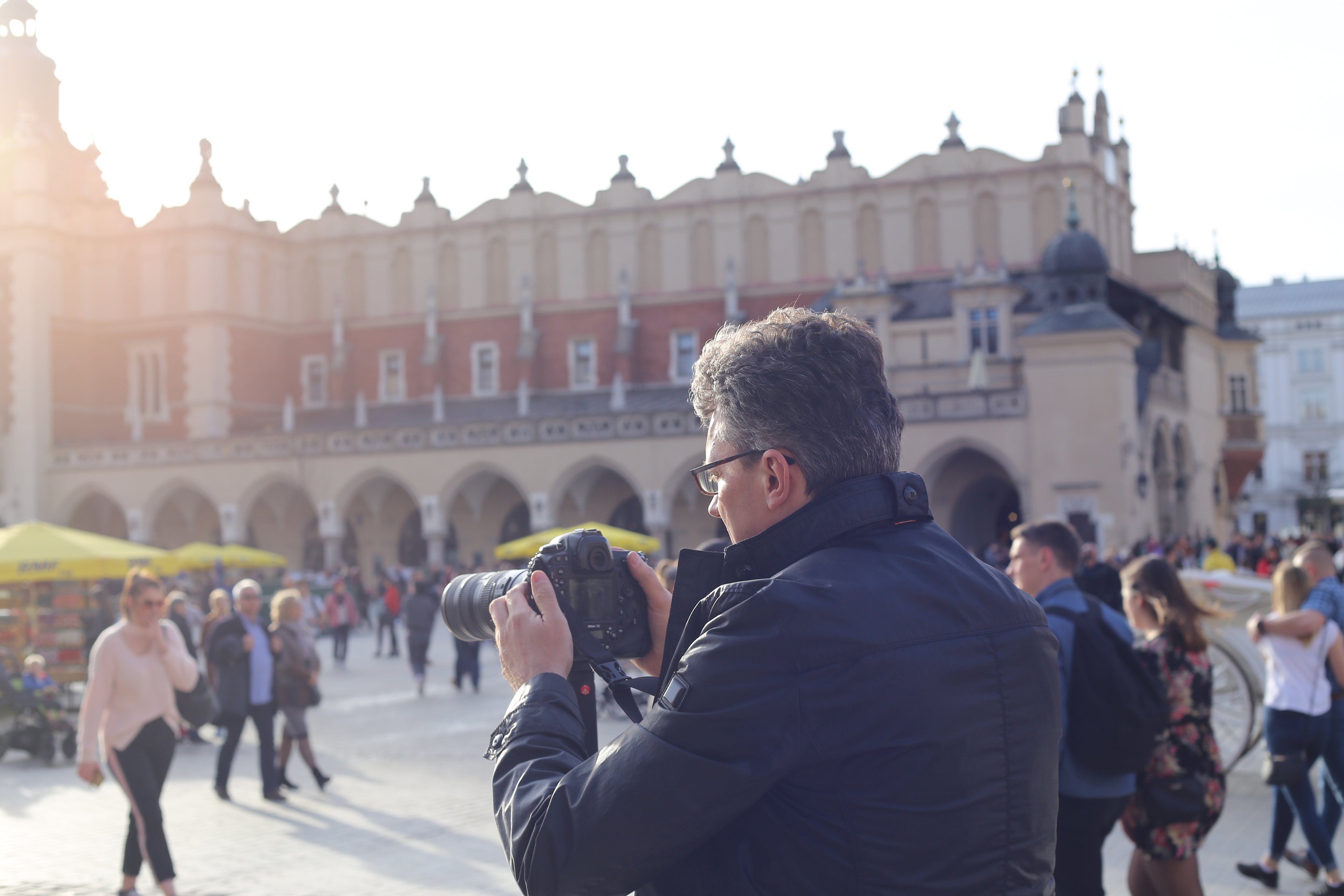
Light doesn’t always need to be on your side. Sometimes the most interesting frames happen when you point the camera straight into it, when the sun stops being a source of illumination and becomes part of the subject itself. Shooting against the sun flips the usual logic of photography—exposure becomes negotiation, contrast becomes character, and what you lose in detail you gain in atmosphere.
The first thing that hits you is how quickly the scene simplifies. Colors wash out, edges glow, and shapes take over. People become silhouettes, trees turn into graphic cutouts, and buildings dissolve into outlines with halos. It’s almost like the scene edits itself for you, stripping away distractions. That’s why this approach works so well for storytelling—you’re not documenting every detail, you’re hinting at it. A person walking into sunlight suddenly feels more like a narrative than a snapshot.
Then there’s the flare. Sometimes you fight it, sometimes you lean into it. A slight shift of your angle—just a few centimeters—can turn chaotic streaks into controlled bursts. Older lenses tend to flare in messy, unpredictable ways, while modern coatings keep things cleaner, but honestly, a bit of imperfection often makes the image feel more alive. Let the light leak in, let it scatter. It adds that sense of heat, of time, of being there.
Exposure becomes the real game. If you meter for the subject, the sky blows out into white. If you meter for the sky, the subject drops into shadow. Neither is wrong. It just depends on what you want the image to say. Silhouettes are the obvious choice—underexpose, keep the highlights, let everything else fall away. But sometimes lifting the shadows just a bit reveals a surprising balance, especially during golden hour when the light is softer and more forgiving.
And golden hour, yeah, that’s where this technique really breathes. The sun sits low, stretching shadows and wrapping everything in warm tones. You can position it just behind your subject, letting it peek through edges—hair, shoulders, leaves—and suddenly you get that rim light effect, a thin glowing outline that separates the subject from the background. It’s subtle, but it changes everything.
Technically, it can feel a bit messy at first. Autofocus might hunt, dynamic range gets pushed, and you’ll probably end up with a few frames that look completely washed out. But that’s part of it. Shooting into the sun isn’t about perfect control—it’s about working with a scene that refuses to behave. You adjust, you experiment, you take a few steps left or right, maybe crouch a little, and then suddenly it clicks.
And when it does, the image has this strange quality—less about what you see, more about what you feel. The glare, the warmth, the slight loss of clarity—it all pulls you into the moment in a way that technically “correct” lighting rarely does. It’s not always clean, not always predictable, but that’s exactly why it’s worth chasing.
Related